
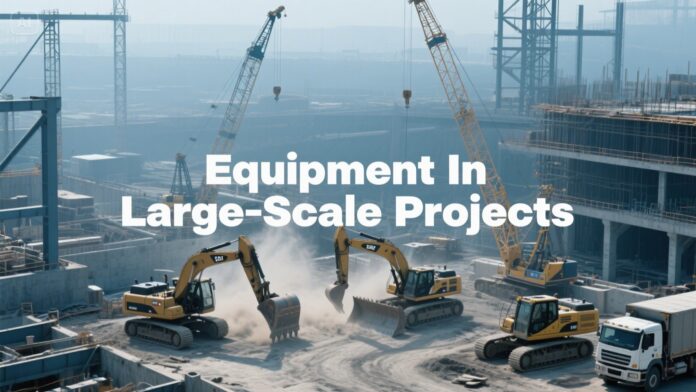
Construction projects often require specific tools and gear due to their size. Highways, bridges, skyscrapers, and industrial complexes require heavy construction equipment for power and precision. These machines are essential in helping contractors meet strict timelines, achieve desired quality standards, and maintain safety on-site. In this article, we explore the importance of heavy construction equipment in large-scale projects and the unique role it plays in transforming ambitious blueprints into reality. We cover this in more depth in Effect of Partition Actions on Property Taxes and Liens in Florida.
The Need For Heavy Construction Equipment
A large-scale construction project typically involves extensive site preparation, heavy lifting, and the movement of large quantities of materials. Without heavy construction equipment, these tasks would be impossible or inefficient, requiring a far greater number of workers and much longer timelines. From the excavation of the earth to the lifting and positioning of massive structural elements, heavy construction equipment is designed to handle tasks that are simply beyond human capability.
Excavators, bulldozers, and backhoes are some of the most commonly used heavy equipment in the initial stages of a project. These machines move massive quantities of dirt, rocks, and debris to clear the land and make way for construction. Cranes, bulldozers, and wheel loaders hoist steel beams, concrete slabs, and big prefabricated modules as the project proceeds. Heavy equipment makes it possible to carry out these activities with remarkable speed and precision, ensuring the project stays on schedule.
Speed And Efficiency
Heavy construction equipment accelerates construction. Tasks that might take days or weeks to complete by manual labor can be finished in a fraction of the time when using the right machines. For example, a bulldozer can move large volumes of earth in a matter of hours, something that would take dozens of workers using traditional shovels and wheelbarrows. Cranes, on the other hand, can lift and place heavy objects with high accuracy, minimizing delays during the installation of critical components like structural steel.
The ability to accelerate the pace of construction directly impacts the overall success of large-scale projects. Time is often one of the most valuable commodities in construction, especially when a project is bound by deadlines for regulatory compliance or commercial reasons. Heavy equipment ensures that the work progresses efficiently and allows contractors to meet milestones on time, which is critical for keeping the budget under control and satisfying clients.
Precision And Safety
Heavy construction equipment not only increases the speed of construction but also improves the precision of the work being done. Machines like cranes, loaders, and bulldozers are designed to perform with high accuracy, ensuring that materials are moved, placed, and installed exactly where they need to go. For example, a crane can place a steel beam precisely in the correct position, preventing costly mistakes or delays. Such precision would be difficult, if not impossible, to achieve by human labor alone, particularly when dealing with oversized materials or working at great heights.
Additionally, the use of heavy construction equipment plays a crucial role in safety. Large-scale construction sites are inherently hazardous, and heavy lifting tasks, such as lifting steel beams or lifting large construction materials, can pose serious risks if not performed correctly. With specialized equipment like cranes, excavators, and loaders, contractors can perform these tasks more safely and reduce the likelihood of injury or accidents on-site. Operators of these machines are trained to use them safely, adhering to strict safety protocols that minimize risk. As a result, the overall safety of the construction site is enhanced, helping to protect workers and prevent costly accidents that could delay the project.
Cost-Effectiveness In The Long Run
Heavy construction equipment may seem expensive at first, but the long-term financial benefits are evident. By using this equipment, contractors can complete tasks more quickly and with fewer workers, which ultimately saves money. The efficiency provided by heavy equipment reduces the need for overtime, delays, and extended labor costs. Furthermore, heavy machinery is often more reliable and durable than manual labor, leading to fewer repairs and replacement costs.
Heavy equipment also allows for the use of prefabricated or pre-assembled components, which can be quickly delivered and installed using cranes or loaders. This modular approach not only speeds up the process but also reduces the amount of on-site labor needed. Compared to typical construction methods, lifting a pre-assembled building unit with a crane saves time and money.
Conclusion
Heavy construction equipment is the backbone of any large-scale construction project. It enables contractors to complete tasks with speed, precision, and safety, ensuring the project remains on schedule and within budget. From the excavation of earth to the lifting of massive building components, these machines are designed to handle the heavy lifting that would be impossible to achieve with manual labor alone. Their role in large-scale projects cannot be overstated, as they are critical to transforming ambitious visions into tangible, functional structures. By relying on the power and efficiency of heavy construction equipment, contractors can build with confidence, knowing that their projects will be completed faster, more safely, and more cost-effectively.
Apart from that, if you want to read more , then visit our” Real Estate” Catagory.