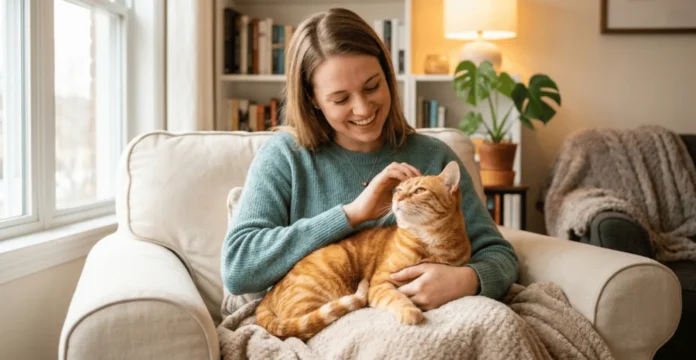
Quick answer: An orange tabby cat is not a separate breed; it is a cat with orange pigmentation and a visible tabby coat pattern. Most orange cats are male because the color trait is X-linked, while personality, size, lifespan, and care needs depend much more on the individual cat, ancestry, environment, and health.
Orange tabbies are among the most recognizable cats in American homes, shelters, and popular culture, and they turn up regularly in our lifestyle coverage. Their coats can range from pale cream and golden apricot to deep reddish orange, while their markings may appear as narrow stripes, broad swirls, spots, or subtler bands. Modern genetic research has finally explained a mystery scientists have investigated for decades.
The familiar ginger coat is only one part of the story, because an orange tabby can be a domestic shorthair, a longhaired mixed-breed cat, or a member of a recognized breed. That means no single orange tabby personality, adult weight, grooming schedule, or lifespan fits every cat. Understanding the difference between coat color and breed makes it much easier to separate useful facts from the many stereotypes surrounding these cats.
Orange Tabby Facts at a Glance
| Feature | What to Know |
|---|---|
| Breed | Orange tabby is a color-and-pattern description, not a breed |
| Coat color | Ranges from pale cream to rich red-orange |
| Tabby patterns | Mackerel, classic, spotted, and ticked |
| Forehead marking | Many show the familiar tabby “M” |
| Sex ratio | About 80% of orange cats are male, and about 20% are female |
| Genetics | A 2025 discovery linked orange coloration to a deletion affecting ARHGAP36 on the X chromosome |
| Personality | Color does not reliably determine temperament |
| Lifespan | No unique orange-tabby lifespan; lifestyle and health matter more |
| Common pigment feature | Dark lentigo spots are especially common in orange cats |
| Special diet needed? | No; feed according to age, body condition, health, and veterinary guidance |
What Is an Orange Tabby Cat?
An orange tabby cat is any domestic cat combining orange pigmentation with a tabby pattern. “Tabby” describes coat markings rather than a particular pedigree, which is why orange tabbies can have very different body shapes, coat lengths, facial structures, and adult sizes. Domestic cats and numerous established breeds can display tabby coats, so appearance alone does not identify a cat’s breed.
Orange cats are particularly interesting because some degree of tabby pattern is normally visible in their coats, even when the markings appear faint. This can make one cat look boldly striped while another seems almost solid orange until you view it in brighter light. The familiar darker lines around the face, legs, and tail are often among the easiest markings to see.
Why Are Orange Cats Orange? Genetics Finally Gave Scientists an Answer
For many years, researchers knew orange coloration was linked to the X chromosome but didn’t know the precise molecular mechanism behind it. Two research teams reporting in Current Biology in 2025 identified a roughly 5-kilobase deletion associated with the ARHGAP36 gene region as the key genetic change. The alteration changes gene activity in pigment-producing melanocytes and shifts hair pigmentation toward reddish-yellow coloration.
The discovery was significant because ARHGAP36 had not previously been known as a conventional mammalian coat-color gene. One research group found the deletion consistently associated with orange coloration across additional cats, while the work also helped explain the orange-and-black mosaic seen in tortoiseshell and calico females through X-chromosome inactivation. The findings solved a long-standing puzzle in feline genetics rather than simply confirming an old observation about ginger cats.
Why Are Most Orange Cats Male?
The orange trait’s location on the X chromosome explains why male orange tabbies are much more common. A typical male cat has one X and one Y chromosome, so an orange-associated variant on his single X chromosome can produce an orange coat. A typical female has two X chromosomes and generally needs the orange-associated version on both for a predominantly orange coat, making that combination less common.
PetMD estimates that only about 20% of orange cats are female, which means roughly four out of five are male. Female orange cats are therefore less common, not exceptionally rare, and finding one is entirely normal. Coat color also can’t replace actually checking a kitten’s sex, especially when making veterinary or adoption decisions.
The Four Main Orange Tabby Patterns
Not every ginger tabby has the same narrow stripes. Tabby markings are generally described using four major patterns, and orange pigmentation can appear with each of them. Learning the patterns also helps you describe a lost cat accurately or compare kittens from the same litter.
- Mackerel tabby: Narrow vertical stripes run down the sides from a darker line along the back, producing the classic “tiger cat” appearance.
- Classic tabby: Thick curved markings and broad swirls create a marbled or bull’s-eye pattern along the sides.
- Spotted tabby: Spots or broken stripes appear across the body instead of continuous vertical lines.
- Ticked tabby: Individual hairs have alternating pigment bands, so obvious body stripes can be reduced while markings remain more noticeable on the face, legs, or tail.
Pattern does not tell you whether a cat is purebred, mixed-breed, outgoing, quiet, large, or small. Two orange siblings may even differ noticeably in the intensity or arrangement of their markings. The warm color and tabby pattern are therefore better treated as physical characteristics than as a shortcut for predicting everything else about the animal.
Are Ginger Tabbies Really Friendlier?
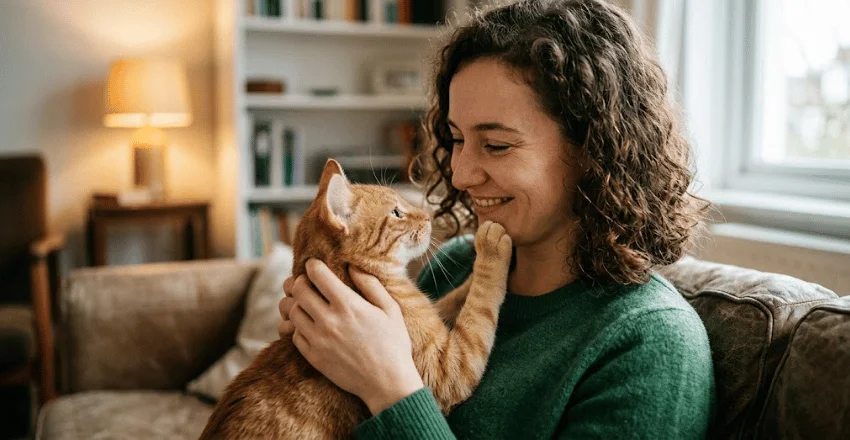
Orange tabbies have a cultural reputation for being affectionate, outgoing, food-motivated, mischievous, or occasionally comically impulsive. Those descriptions can certainly fit individual cats, but coat color alone is not a dependable personality test. Breed background, early socialization, previous experiences, health, age, household conditions, and each cat’s individual temperament matter more when predicting behavior.
A friendly orange kitten may grow into an extremely social adult, while another ginger cat may prefer quiet observation and limited handling. When adopting, watch how the particular cat responds to touch, toys, unfamiliar people, noise, and changes in its environment rather than relying on internet stereotypes. A shelter or foster caregiver who has spent time with the cat can usually provide more meaningful behavioral information than coat color ever could.
Cats also communicate affection in ways people occasionally overlook. Slow blinking, rubbing or head-butting, choosing to remain near a person, and following a trusted caregiver can all be social behaviors associated with bonding. Understanding an individual cat’s body language is more useful than expecting every orange tabby to behave like the same fictional or viral ginger cat. Reading an animal on its own terms matters well beyond the living room, as our full day with Thailand’s rescued elephants showed.
How Big Do Orange Tabbies Get?
There is no standard adult size for an orange tabby because orange tabby is not a breed. A domestic shorthair with a lean build may be substantially smaller than a large-framed Maine Coon or another breed that happens to carry orange tabby coloring. Sex can also influence body size, and the high proportion of males among orange cats may help explain why people sometimes perceive ginger tabbies as particularly large.
Healthy weight should be judged by body condition rather than comparisons with another orange cat. Cornell recommends monitoring a cat’s body condition and working with a veterinarian to establish an appropriate target weight, because calorie needs vary considerably among individual cats. Obesity is a common feline nutritional problem and can contribute to conditions such as diabetes and joint disease.
How Long Does a Ginger Tabby Live?
An orange tabby does not have a color-specific life expectancy. Genetics, underlying breed, preventive veterinary care, nutrition, body condition, infectious disease exposure, injuries, and living environment all influence how long an individual cat lives. A well-cared-for orange tabby can therefore remain part of a family well into its senior years.
Living environment can make a particularly large difference because unsupervised outdoor roaming exposes cats to vehicles, wildlife, toxins, infectious disease, and other hazards. PetMD reports an average lifespan of approximately 15–17 years for indoor cats, compared with substantially shorter averages for cats allowed to roam outdoors unsupervised. Those figures apply to cats generally rather than specifically to orange tabbies, but they illustrate why safety decisions matter more than coat color. Owners who want to keep track of a cat that slips outdoors after dark sometimes turn to thermal imaging, and our review of the FLIR One Edge Pro thermal camera covers how well that works for pets and wildlife.
Do Orange Cats Have Special Health Problems?
Orange pigmentation itself does not mean a cat will automatically develop a particular illness. An orange Persian, orange domestic shorthair, and orange Maine Coon may have very different inherited health considerations because their ancestry differs. Veterinary care should therefore be based on the individual cat’s age, breed background (when known), sex, lifestyle, examination findings, and medical history.
One harmless-looking feature common in ginger cats is lentigo, which produces flat dark brown or black pigment spots. PetMD notes that lentigo is especially common in orange cats and may appear on the nose, lips, and eyelids. Still, owners should show new, raised, irritated, bleeding, rapidly changing, or otherwise unusual spots to a veterinarian rather than automatically dismissing them as freckles.
Owners of male orange tabbies should also remember that male cats have a higher risk of potentially life-threatening urinary tract blockage than females. This is a sex-related risk rather than an orange-coat disorder, but it matters because most orange cats are male. Any concerning urinary changes in a male cat warrant prompt veterinary attention, not waiting to see whether the problem resolves itself.
How to Care for a Ginger Tabby
Feed for Body Condition, Not Fur Color
Orange cats do not need a special “ginger cat” diet. In the United States, choose a nutritionally complete and balanced food appropriate for the cat’s life stage and discuss portions with your veterinarian, particularly after neutering, during major weight changes, or when medical conditions are present. Cornell emphasizes maintaining an appropriate body condition because excessive weight increases the risk of several health problems.
Food portions also deserve more attention than the stereotype of the endlessly hungry orange cat suggests. A cat that begs frequently may enjoy the interaction around food rather than genuinely needing extra calories, and unrestricted feeding can make intake hard to monitor. Use measured meals or another veterinarian-approved feeding strategy that fits the individual animal and household.
Provide Climbing, Hiding, Scratching, and Play Opportunities
Indoor living becomes much more satisfying when a cat can safely perform normal feline behaviors. FelineVMA guidance recommends access to hiding and climbing areas plus separate resources for food, water, resting, toileting, scratching, and play or predatory behavior. These environmental choices give cats greater control over their surroundings and can help support both physical and behavioral well-being.
Use sturdy scratching surfaces, elevated resting locations, interactive toys, and regular short play sessions rather than expecting a cat to entertain itself indefinitely. Rotate toys periodically so familiar objects feel new again, and provide quiet areas where the cat can withdraw without being followed. An orange tabby’s enrichment requirements come from being a cat, not from being orange.
Match Grooming to Coat Length
A shorthaired orange tabby usually requires less brushing than a longhaired ginger cat, but regular grooming still provides an opportunity to notice skin changes, parasites, mats, lumps, or changes in body condition. Longhaired cats generally need more frequent attention because loose fur can tangle and mat, particularly around friction-prone areas. Introduce brushing gradually and pair calm cooperation with something the individual cat values.
Also include claw care, dental health, ears, and eyes in routine observation. Changes in grooming habits can be meaningful because cats experiencing pain, illness, obesity, or reduced mobility may stop maintaining areas they previously kept clean. A sudden increase in licking or scratching can likewise justify checking for parasites, allergies, discomfort, or other problems rather than assuming the behavior is cosmetic.
Keep Preventive Veterinary Care Consistent
The AAHA/AAFP feline life-stage framework divides cats into kitten, young-adult, mature-adult, and senior stages because healthcare priorities change with age. Professional guidance recommends thorough physical examinations at least annually for cats generally, with senior cats needing more frequent assessment depending on age and health. Vaccination, parasite prevention, dental care, nutrition, screening, and other recommendations should be individualized to the cat’s lifestyle and medical history.
Routine appointments matter even when an orange tabby appears perfectly healthy because cats can conceal signs of illness effectively. Recording changes in weight, appetite, thirst, litter-box habits, mobility, sleep, grooming, and social behavior can give the veterinarian useful context during an examination. Prevention and early detection will influence long-term health far more than any supposed advantage or disadvantage associated with orange fur.
Is an Orange Tabby Right for You?
An orange tabby can be an excellent companion for many households, but color should be near the bottom of the adoption checklist. Instead, focus on energy level, confidence, handling tolerance, compatibility with children or other pets, medical needs, grooming requirements, and whether the cat’s temperament fits your daily routine. A confident adolescent orange cat and a quiet senior ginger tabby may require completely different homes despite sharing nearly identical coloring.
If adopting from a U.S. shelter or rescue, ask what staff or foster caregivers have observed in a home-like environment. Learn what food and litter the cat currently uses, request available veterinary records, and arrange an initial appointment with your own veterinarian after adoption. Choosing the individual rather than the stereotype gives both the cat and household a better chance of forming a lasting match.
Frequently Asked Questions
Are orange tabbies a breed?
No, an orange tabby cat is not a specific breed. “Orange” refers to pigmentation, while “tabby” describes a pattern that can appear in domestic mixed-breed cats and numerous recognized breeds. You can’t determine a breed simply because a cat has ginger stripes.
Are all orange cats male?
No, female orange tabbies absolutely exist. Approximately 20% of orange cats are female, while males account for roughly 80%, because orange coloration is linked to the X chromosome. The imbalance makes females less common but not extraordinarily rare.
Do all orange cats have tabby markings?
Orange cats show tabby patterning to some degree, although the contrast can be strong or extremely subtle. Some have obvious mackerel stripes or classic swirls, while others appear nearly uniform at first glance. Looking at the forehead, legs, and tail often makes faint markings easier to recognize.
Are ginger tabbies more affectionate?
Some orange tabbies are extremely affectionate, but no dependable rule says orange fur produces a friendlier personality. Early socialization, genetics beyond coat color, breed tendencies, experiences, health, and the home environment all contribute to temperament. Evaluate the individual cat’s behavior instead of choosing a pet based solely on a color stereotype.
How long do orange tabbies live?
There is no special lifespan that applies only to orange tabbies. Many well-cared-for indoor cats live into their teens, and PetMD currently cites an average indoor-cat lifespan of about 15–17 years. Individual longevity can be shorter or longer depending on genetics, disease, preventive care, nutrition, safety, and lifestyle.
Why does my orange cat have black spots on its nose?
Flat dark spots on the nose, lips, or eyelids of orange cats may be lentigo, a pigment condition comparable in appearance to freckles. Lentigo is particularly common in orange cats, but owners should not diagnose every dark lesion from appearance alone. Ask a veterinarian to examine spots that are new, changing, raised, irritated, bleeding, or otherwise concerning.
Do orange tabbies need a special diet?
No special food is required simply because a cat is orange. Instead, the diet should reflect age, health, activity, reproductive status, body condition, and any veterinarian-diagnosed medical needs. For U.S. cats, choosing an appropriate complete and balanced diet and controlling portions matter far more than buying food marketed around coat color.
The Bottom Line
The orange tabby cat is memorable because of its warm coloration, unmistakable markings, and fascinating X-linked genetics, but orange tabbies are far more diverse than their internet reputation suggests. Modern research has identified the genetic change associated with their coloration, while veterinary evidence makes clear that temperament, health, and longevity cannot be predicted from ginger fur alone. Choose and care for the individual cat in front of you, and treat the orange coat as a beautiful finishing detail rather than the animal’s definition.