
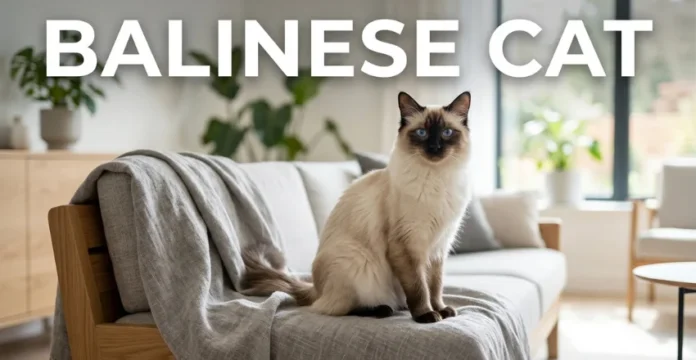
A Balinese cat combines Siamese elegance with a soft coat, plumed tail, and striking blue eyes. These cats are social, vocal, intelligent, and happiest when daily life includes people, play, and climbing. For U.S. owners, the biggest questions involve allergy claims, health screening, grooming, and fit in the home.
The breed is a longhaired Siamese relative with blue eyes, a silky single coat, and strong social needs. It is intelligent, vocal, athletic, and usually easy to groom. The best home provides daily interaction, climbing space, play, and consistent veterinary care.
Balinese Breed Facts at a Glance
| Feature | What to Know |
|---|---|
| Origin | United States |
| Breed type | Longhaired relative of the Siamese |
| Adult weight | Commonly about 5–12 pounds |
| Coat | Silky, single-layered, medium-long |
| Eyes | Blue |
| Temperament | Social, intelligent, active, vocal |
| Grooming | Usually weekly brushing is enough |
| Lifespan | Often into the teens, with some reaching 20 years |
| Family fit | Often good with respectful children and compatible pets |
| Allergy status | No cat breed is truly hypoallergenic |
TICA describes the breed as social, talkative, medium-sized, and closely related to the Siamese. Current Chewy guidance lists a typical weight range of 5–12 pounds and a 10–20-year lifespan. Individual cats can fall outside either range because genetics and health still matter.
What Is a Balinese Cat?
The Balinese cat developed from longhaired kittens appearing in Siamese bloodlines rather than from cats native to Bali. TICA identifies the United States as the breed’s country of origin. Formal breeding programs began during the twentieth century as breeders preserved the longer coat.
The breed keeps the Siamese body shape, pointed coloring, blue eyes, and highly interactive personality. Its biggest visual difference is the longer coat and fuller tail plume. The single coat also lacks the dense undercoat found in many longhaired breeds.
Don’t confuse coat color with breed identity when comparing different cats. NewPape’s orange tabby guide explains why color and pattern alone do not define a breed. Pedigree history, structure, and breed standards provide much stronger identification.
Temperament and Family Fit
These cats usually want to participate in household life rather than watch it from another room. They often follow people, vocalize for attention, and learn routines quickly. Interactive play and positive-reinforcement training can keep their active minds occupied.
Many enjoy living with children or other pets when introductions are calm and carefully supervised. Individual temperament still matters more than any breed description. Children should learn to respect resting spaces, tails, ears, and clear signals that handling should stop.
Long daily absences may be harder for this breed than for a more independent companion. PetMD notes that these cats often prefer frequent human or animal company. A compatible feline companion can help, but it never replaces interaction with the household.
Appearance, Size, and Lifespan
The body is slender, muscular, and athletic rather than heavy or stocky. Large ears, a wedge-shaped head, blue eyes, and a graceful tail create the recognizable Siamese-like profile. Adult males may also become noticeably larger than females.
Current breed references place many adults between roughly 5 and 12 pounds. Lifespan estimates vary among organizations, which is normal for breed averages. TICA reports that some individuals live beyond 20 years, while Chewy lists 10–20 years.
A long lifespan also means owners should plan for changing needs across several life stages. Nutrition, dental health, body condition, mobility, and veterinary screening become more important with age. AAHA recommends at least yearly examinations and more frequent assessment for senior cats.
Are These Cats Hypoallergenic?
Claims that this breed is hypoallergenic deserve caution because the science does not support an allergy-free cat breed. All cats produce allergens, including the important protein Fel d 1. Allergen production also varies substantially from animal to animal.
Lower shedding does not automatically mean an allergic person will tolerate a particular cat. Hair length is not a reliable measure of household allergen exposure. ACAAI specifically states that studies have not shown cats to be truly hypoallergenic.
Anyone with cat allergies should spend meaningful time around the individual animal before adoption. People with asthma or stronger reactions should discuss exposure with an allergist first. Testing real-world tolerance is safer than relying on marketing claims about breed-level allergen production.
Grooming and Everyday Care
The flowing coat looks demanding, but its single-layer structure usually makes routine care straightforward. CFA says these cats are less prone to matting than many double-coated longhaired breeds. Brushing weekly, or several times monthly, usually removes loose hair and keeps the tail neat.
Grooming should also include claw checks, ear observation, and regular dental care. AAHA recommends daily tooth brushing when a cat tolerates it. Veterinary dental examinations remain important because home cleaning cannot diagnose disease beneath the gumline.
These active cats also need vertical territory and regular opportunities to chase, climb, and investigate. A sturdy tree, scratching surfaces, food puzzles, and interactive toys can support normal feline behavior. Rotate activities instead of leaving the same toys available every day.
Supervised outdoor access can add stimulation while reducing several free-roaming risks. A secure catio or harness routine offers more control than unrestricted roaming. NewPape’s FLIR One Edge Pro review also covers thermal imaging for pet and wildlife monitoring.
Health Concerns Worth Discussing With a Veterinarian
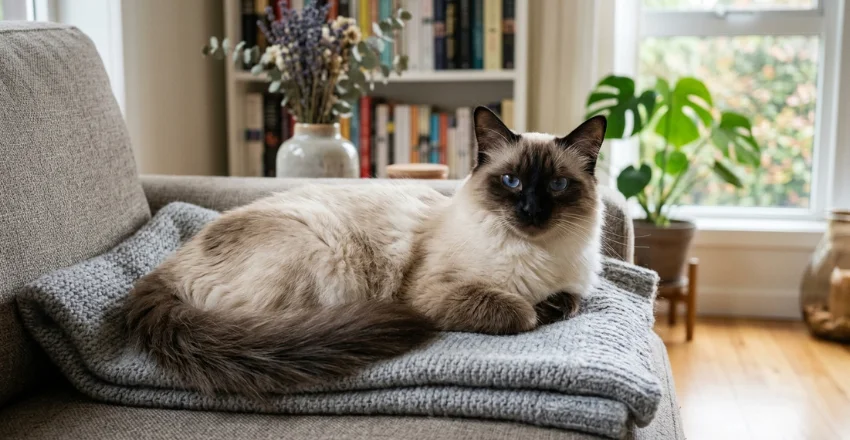
Breed references mention progressive retinal atrophy, dental disease, and several inherited conditions linked with Siamese ancestry. PetMD also discusses amyloidosis as a possible concern. Specific risk varies by bloodline, so family history and responsible breeding matter greatly.
Progressive retinal atrophy can cause worsening vision over time, and genetic testing is available for relevant lines. CFA notes that responsible breeders increasingly use genetic and physical screening. Buyers should ask which tests were performed and request documentation rather than accepting verbal assurances.
Dental disease deserves equal attention because it affects cats across breeds. AAHA recommends preventive oral care and regular veterinary dental assessment. Bad breath, inflamed gums, drooling, or changes in eating habits warrant a veterinary examination.
Balinese vs. Siamese: The Main Differences
These related breeds share far more than they differ. Both are intelligent, social, vocal, color-pointed cats with a strong interest in people. Their clearest distinctions involve coat length and tail appearance.
| Trait | Balinese | Siamese |
|---|---|---|
| Coat | Medium-long and silky | Short and fine |
| Undercoat | Little or no dense undercoat | Short single-style coat |
| Tail | Full, plumed appearance | Sleeker, tapered appearance |
| Personality | Social, vocal, intelligent | Social, vocal, intelligent |
| Grooming | Light regular brushing | Minimal brushing |
| Allergy-free? | No | No |
Choose based more on coat preference and the individual animal than on personality stereotypes. Both generally need interaction, enrichment, and vertical space. Neither should be selected as an allergy-safe guarantee.
Finding a Healthy Kitten or Adult in the U.S.
Start with breeders connected to recognized organizations and ask detailed questions before discussing a deposit. TICA maintains breeder resources, while CFA notes that this breed can sometimes be difficult to find. CFA also suggests considering retired adults when kitten availability is limited.
Ask for health records, vaccination history, genetic-testing information, and details about the parents. Reputable breeders should discuss health concerns without avoiding difficult questions. They should also care where each kitten will live and remain available after placement.
Rescue organizations may occasionally have pedigree cats or similar Siamese-type longhairs needing homes. An adult can offer a clearer picture of temperament and grooming needs. Whichever route you choose, arrange an initial veterinary visit soon after bringing the cat home.
Is This Breed Right for Your Home?
This breed suits people who want an interactive companion and can provide regular play and attention. It may frustrate households seeking a consistently quiet or highly independent pet. Its grooming burden is moderate, but its social needs can be substantial.
A good home also has safe climbing areas, scratching options, routine veterinary care, and predictable human interaction. Allergy-sensitive households should test their response to the individual animal first. Choosing based on realistic daily needs creates a stronger match than choosing for appearance alone.
If a Balinese cat matches your lifestyle, research breeders, rescues, and veterinary care before committing. You can also browse NewPape’s Pets section for more animal-care coverage. A thoughtful choice gives both the household and the cat a better chance of thriving.
Frequently Asked Questions
Is a Balinese cat hypoallergenic?
No cat breed is reliably hypoallergenic, and all cats produce proteins that can trigger allergies. Individual allergen production can differ greatly, so one animal may cause fewer symptoms than another. Spend time with the specific cat before committing.
Do these cats shed a lot?
The silky single coat usually sheds less dramatically than many dense, double-coated longhaired coats. Regular brushing removes loose hair and helps keep the plume tidy. Shedding still occurs, so owners should not expect a hair-free home.
Are they good with children?
They often enjoy active households and can bond strongly with respectful children. Proper introductions and gentle handling remain essential because every individual has different limits. Adult supervision is especially useful with younger children.
How much grooming do they need?
A quick weekly brushing is enough for many individuals because the coat has little dense undercoat. Mats are usually less troublesome than they are in heavier longhaired coats. Nail, ear, and dental care should still be part of the routine.
How long can they live?
Many live well into their teens when given strong preventive care and a safe environment. Current breed references also document individuals reaching 20 years or more. Genetics, nutrition, disease, body condition, and veterinary care influence every cat’s lifespan.