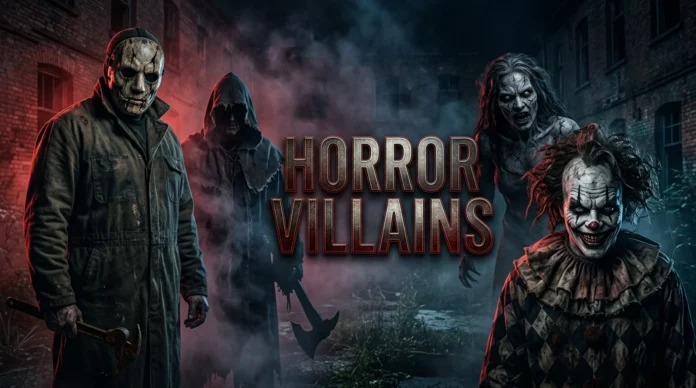
Few movie characters stick in our memories as much as great horror villains. Their faces, weapons, voices, and stories often outlive the films themselves. Some represent human evil, while others turn nightmares, monsters, or supernatural forces into unforgettable threats on screen.
The most enduring scary-movie antagonists combine an instantly recognizable look with a fear audiences understand. Michael Myers represents unstoppable pursuit, Freddy Krueger attacks sleep, and Ghostface turns ordinary people into suspects. Newer figures like Art the Clown show that horror can create fresh icons without replacing its classics.
15 Horror Icons at a Glance
| Character | Key Film | First Released | What Makes the Character Memorable |
|---|---|---|---|
| Count Dracula | Dracula | 1931 | Charm mixed with supernatural danger |
| Norman Bates | Psycho | 1960 | Ordinary appearance hiding deadly secrets |
| Leatherface | The Texas Chain Saw Massacre | 1974 | Chaotic violence and disturbing family horror |
| Michael Myers | Halloween | 1978 | Silent, relentless pursuit |
| Xenomorph | Alien | 1979 | Predatory design and claustrophobic terror |
| Jason Voorhees | Friday the 13th Part 2 | 1981 | Physical power and relentless survival |
| Freddy Krueger | A Nightmare on Elm Street | 1984 | Attacks victims through their dreams |
| Pinhead | Hellraiser | 1987 | Pain, temptation, and supernatural horror |
| Chucky | Child’s Play | 1988 | Innocent toy turned murderous |
| Hannibal Lecter | The Silence of the Lambs | 1991 | Intelligence used as psychological intimidation |
| Ghostface | Scream | 1996 | A killer identity anyone can assume |
| Jigsaw | Saw | 2004 | Elaborate moral tests and deadly traps |
| Pennywise | It | 2017 | Exploits personal fears |
| Art the Clown | Terrifier | 2016 | Silent physical comedy mixed with brutality |
| The Smile Entity | Smile | 2022 | Psychological dread passed from victim to victim |
Why Horror Villains Stay With Us
Memorable antagonists usually give fear a simple visual identity. A white mask, striped sweater, hockey mask, or painted clown face becomes recognizable within seconds. That clarity helps a character survive long after one movie leaves theaters. For more film and TV features, browse our entertainment coverage on Newpape.
The strongest characters also represent fears beyond physical violence. Freddy turns sleep into danger, while the Xenomorph removes safety from enclosed spaces. Ghostface adds distrust because the person behind the mask can change.
Longevity also matters when judging cultural impact. Universal describes Dracula and its other classic monsters as characters that helped establish screen horror traditions. Decades later, modern franchises continue using similar combinations of strong imagery and repeatable mythology.
Classic Monsters and Psychological Nightmares
1. Count Dracula
Bela Lugosi’s Dracula helped define how American audiences pictured the sophisticated screen vampire. His formal clothing and controlled manner made danger look strangely inviting. That contrast sets Dracula apart from monsters built on brute force.
The character also changes easily between generations. Filmmakers can make Dracula romantic, frightening, tragic, or grotesque without losing his core identity. Universal still places Dracula among the central figures of its classic monster collection.
2. Norman Bates
Norman Bates changed horror by making an apparently mild person deeply unsettling. Psycho places danger inside an ordinary roadside motel rather than a distant supernatural setting. That closeness makes Norman’s story feel disturbingly possible.
His impact also comes from uncertainty and concealment. Viewers spend much of the film misunderstanding the real source of the violence. The American Film Institute later placed Norman Bates second on its list of notable movie villains.
3. Leatherface
Leatherface creates fear through frantic movement, noise, and unpredictability. His human-skin mask gives him one of horror cinema’s most recognizable appearances. The chainsaw turns every chase into a loud and immediate threat.
Yet he differs from many later slasher killers. His actions exist within the disturbing family structure surrounding him. That setting makes The Texas Chain Saw Massacre feel less like a simple pursuit story.
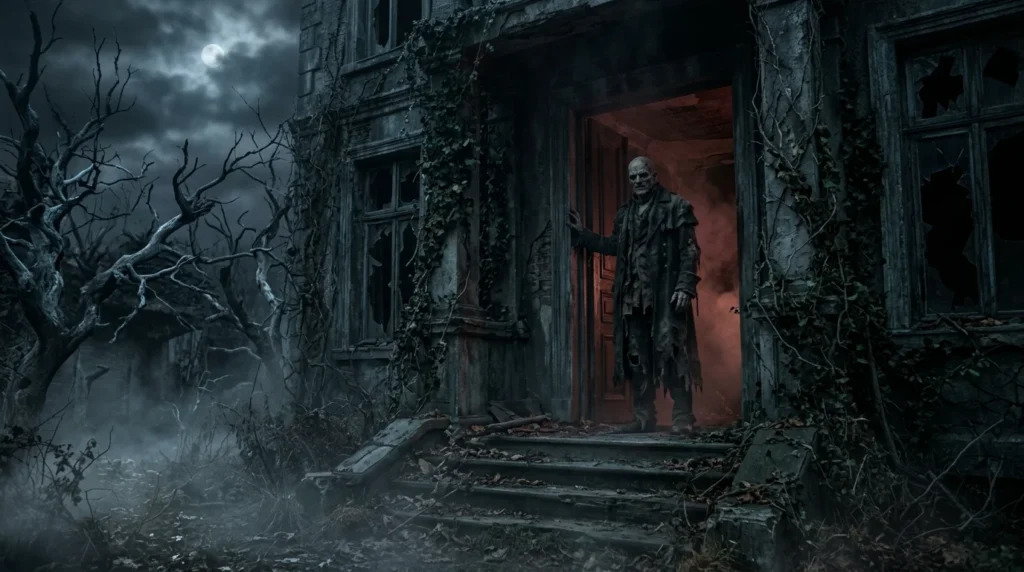
The Slasher Era Created New American Icons
4. Michael Myers
Michael Myers made simplicity frightening. His blank mask reveals almost nothing, while his silence removes the explanations audiences normally expect. He often appears to watch before he attacks.
That restraint became central to the character’s appeal. Michael does not need elaborate speeches or complicated equipment to control a scene. His slow pursuit suggests that escape may only delay the threat.
5. Jason Voorhees
Jason became strongly associated with the hockey mask and the Friday the 13th series. His physical strength gives his scenes a different rhythm from Michael Myers. Victims often seem to face something closer to a force than a person.
The character also illustrates how horror franchises can evolve. Jason was not the central killer in the original 1980 film. His later appearances gradually created the image audiences now recognize.
6. Freddy Krueger
Freddy Krueger removes one of humanity’s basic escapes from fear. His victims eventually need sleep, which gives him access to their dreams. That rule makes it nearly impossible to avoid him.
His personality also separates him from silent slashers. Freddy talks, taunts, jokes, and reshapes dream environments around his targets. Robert Englund’s performance helped turn those qualities into a distinctive screen persona.
7. Chucky
Chucky twists a familiar childhood object into a threat. His small size initially makes him easy for adults to dismiss. That disbelief gives the killer doll opportunities his larger counterparts rarely receive.
The character also balances menace with dark comedy. Chucky speaks, argues, mocks victims, and develops recognizable personality traits. Those qualities helped Child’s Play support numerous sequels and television storytelling.
Monsters That Attack the Body and Mind
8. The Xenomorph
The creature from Alien turns survival into biological terror. Its life cycle makes reproduction itself disturbing, while its design avoids familiar animal shapes. The result feels both organic and unknowable.
The setting strengthens that fear considerably. Space offers nowhere practical to run once the creature enters the ship. The characters must confront a predator inside an already isolated environment.
9. Pinhead
Pinhead brings a different kind of threat to Hellraiser. The Cenobites connect pain, pleasure, curiosity, and punishment within the same mythology. That combination gives the films a darker philosophical edge.
His appearance also became instantly recognizable. The geometric pattern across his head creates a controlled image rather than a chaotic one. His calm manner makes the surrounding violence feel even more disturbing.
10. Hannibal Lecter
Hannibal Lecter frightens audiences before he physically attacks anyone. His intelligence allows him to study weaknesses and control conversations from confinement. Anthony Hopkins makes quiet observation feel threatening.
Lecter’s cultural status extends beyond horror fandom. The American Film Institute placed him first among its 50 movie villains. AFI describes its selection criteria as including cultural impact and lasting legacy.
Masks, Games, and Modern Franchise Fear
11. Ghostface
Ghostface differs from most famous masked killers because the identity can pass between people. The costume stays familiar while motives and suspects change. That structure lets every Scream film rebuild its mystery.
The idea remains active decades after the original movie. Paramount’s Scream 7 again centers on a new killer using the Ghostface identity. The film continues Sidney Prescott’s story in 2026.
12. Jigsaw
John Kramer approaches murder differently from traditional slashers. His traps force victims into painful choices connected to his personal ideas about survival. The games make anticipation as important as the violence itself.
The Saw films also encourage viewers to study rules and clues. Characters may survive if they understand what a trap demands. That structure gives the series elements of mystery alongside horror.
13. Pennywise
Pennywise works because the clown is only one form of the threat. The creature studies fear and exploits personal vulnerabilities. That makes each encounter look different.
The clown image remains the character’s most familiar appearance. Bright colors usually suggest amusement, which creates an immediate contradiction. The smile becomes dangerous because audiences know it hides something predatory.
New Horror Villains Building Their Own Legacies
14. Art the Clown
Art the Clown has become one of modern horror’s most visible independent characters. His black-and-white costume gives him a simple silhouette, while his silence emphasizes physical performance. David Howard Thornton’s exaggerated expressions add a strange comedic quality.
That comedy does not make the violence feel harmless. Instead, Art can move from playful behavior to brutality without warning. Recent horror coverage increasingly places him beside established franchise antagonists.
15. The Smile Entity
The Smile Entity represents a newer style of supernatural antagonist. Its threat spreads through trauma rather than relying on a fixed body. That rule allows ordinary faces to suddenly become frightening.
The distorted smile works because it misuses a familiar human expression. A gesture associated with friendliness becomes a warning of danger. The concept shows how modern horror can build an icon without a traditional costume.
What Makes a Horror Villain Truly Scary?
Violence alone rarely creates a lasting character. Audiences remember a threat more easily when it has clear rules, memorable imagery, and emotional meaning. The best concepts also leave room for anticipation before anything happens.
Uncertainty can be equally powerful. Ghostface hides a human identity, while Freddy makes dreams unsafe. The Smile Entity creates fear because familiar people can suddenly become part of the threat.
A strong antagonist also changes how viewers experience ordinary places or activities. Psycho made an isolated motel unsettling, while Jaws famously changed how people perceived open water. Horror works well when the fictional threat follows viewers beyond the screen.
How Horror Icons Have Changed Across Generations
Early American horror relied heavily on monsters, Gothic imagery, and supernatural danger. Later decades increasingly placed killers inside suburbs, camps, homes, and familiar workplaces. That shift brought fear closer to everyday American life.
The 1980s helped turn killers into franchise mascots with clear visual brands. The 1990s added more self-awareness through movies like Scream. Twenty-first-century films have mixed those traditions with trauma, social anxiety, and psychological dread.
New characters do not necessarily replace old ones. Dracula, Norman Bates, Michael Myers, and Ghostface still appear in conversations beside Art and newer supernatural threats. Horror keeps expanding its collection of recognizable fears.
FAQ
Which horror villains are the most famous?
Michael Myers, Jason Voorhees, Freddy Krueger, Ghostface, and Chucky remain widely recognized slasher-era characters. Dracula, Norman Bates, Hannibal Lecter, and the Xenomorph also have major cultural legacies. Newer audiences increasingly recognize Art the Clown and modern supernatural antagonists.
Who was the first famous horror movie villain?
There is no single uncontested first character. Early cinema included monsters and threatening figures before Hollywood developed its classic sound-era icons. Universal’s 1931 Dracula remains a major milestone in American horror history.
Why is Michael Myers so scary?
Michael’s lack of explanation creates much of his effect. His mask hides emotion, while his silence prevents audiences from reading his intentions. His steady pursuit also suggests that running away may not solve the problem.
Is Ghostface always the same person?
No, Ghostface is an identity rather than one permanent killer. Different characters have worn the mask across the Scream series. Paramount’s official descriptions continue to present Ghostface as a recurring identity tied to new killers.
Who are the newer horror icons?
Art the Clown is one of the strongest recent examples. Pearl, the Smile Entity, and other 2020s antagonists have also built growing fan recognition. Their long-term status will depend on future films and continued audience interest.
The Fear Keeps Changing
Great horror characters reveal what audiences fear during different eras. Sometimes that fear wears a mask, while other stories hide it inside dreams or familiar faces. The strongest concepts remain understandable even when filmmaking styles change.
Start with the character whose idea unsettles you most, then explore the film that established that fear. Classic monster movies, slashers, psychological thrillers, and modern supernatural films offer very different experiences. That variety is exactly why scary-movie icons keep returning for new generations.