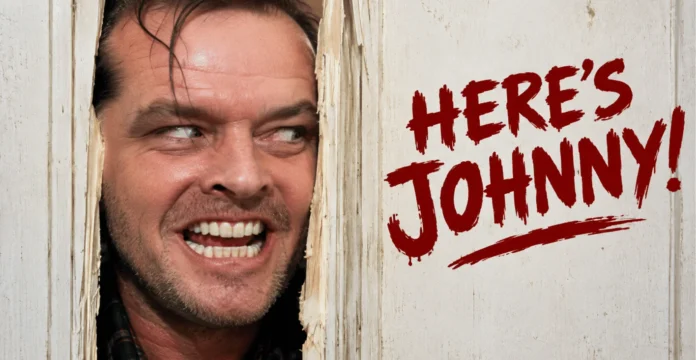
Few movie lines are as instantly recognizable as “Here’s Johnny.” Jack Nicholson delivers the words during the terrifying bathroom-door scene in The Shining. Yet the phrase existed long before Jack Torrance picked up an axe.
The line originally belonged to American late-night television rather than horror. Ed McMahon used it to introduce Johnny Carson to television audiences. Nicholson later transformed that cheerful introduction into one of cinema’s most unsettling moments.
| Key fact | Details |
|---|---|
| Famous phrase | “Here’s Johnny!” |
| Original association | Johnny Carson |
| Famous announcer | Ed McMahon |
| Television program | The Tonight Show Starring Johnny Carson |
| Horror movie | The Shining |
| Movie release | 1980 |
| Actor saying the line | Jack Nicholson |
| Character | Jack Torrance |
| Director | Stanley Kubrick |
| Cultural legacy | Television catchphrase, movie quote, meme, parody, and legal dispute |
Direct answer: “Here’s Johnny” originally refers to Ed McMahon’s famous introduction of Johnny Carson on The Tonight Show. Jack Nicholson later used the phrase as Jack Torrance in The Shining. Its contrast between cheerful television nostalgia and a terrifying axe attack helped turn the moment into an enduring piece of American pop culture.
Where Did “Here’s Johnny” Originally Come From?
The phrase is strongly associated with Johnny Carson’s years on American late-night television. Carson began hosting The Tonight Show in 1962. His announcer and longtime sidekick, Ed McMahon, introduced him with an unmistakably stretched version of the phrase.
McMahon later said the introduction was his idea. He wanted something more memorable than simply announcing Carson’s name. The reaction apparently showed him almost immediately that the phrase worked.
The expression became closely connected with Carson during his long television career. Millions of American viewers heard variations of the introduction before his entrance. That history explains why Nicholson’s later use carried an extra joke for contemporary audiences.
The phrase was already recognizable before The Shining reached theaters. Nicholson wasn’t randomly calling his character Johnny. He was borrowing a familiar piece of American television culture.
Why Does Jack Nicholson Say “Here’s Johnny” in The Shining?
The scene appears during one of the movie’s most frightening confrontations. Jack Torrance has become dangerous and pursues Wendy through the Overlook Hotel. Wendy locks herself inside a bathroom while Jack attacks the door with an axe.
Jack eventually creates an opening in the wooden door. Nicholson pushes his face through the hole and delivers the famous line with a disturbing grin. The cheerful television reference becomes threatening because of everything happening around it.
The joke also makes sense because Jack Torrance’s first name isn’t Johnny. Jack is imitating the introduction associated with Johnny Carson. American viewers familiar with Carson could immediately recognize the reference.
That contrast gives the moment much of its strange power. A friendly television introduction suddenly appears during an attempted attack. Something associated with entertainment and laughter becomes part of a horror scene.
Was the Famous Line Improvised?
The line is widely documented as an improvisation by Jack Nicholson. Contemporary accounts and later reporting describe Nicholson adding the Carson reference during filming. Stanley Kubrick kept the moment in the finished movie.
That choice proved unusually important for the film’s cultural life. The short phrase became inseparable from Nicholson’s performance as Jack Torrance. It also gave audiences a line that could easily be quoted outside the movie.
Improvisation worked especially well because Nicholson understood the American reference. Carson was already a major television personality by 1980. Viewers didn’t need an explanation to understand the joke hidden inside the frightening scene.
Kubrick had spent much of his life in Britain by that period. Reports about the production suggest the Carson reference wasn’t initially as obvious to him. The scene survived and eventually became one of the movie’s defining images.
Why the Scene Became So Famous
The dialogue alone doesn’t explain the scene’s staying power. Nicholson’s facial expression, the damaged door, and Wendy’s fear create an instantly recognizable composition. The short line gives that visual moment an equally memorable sound.
The sequence also combines comedy with genuine danger. Viewers recognize the delivery as theatrical and playful. The situation surrounding Jack makes the same performance deeply disturbing.
That combination makes the scene unusually easy to parody. Creators can replace Nicholson’s face, change the character behind the door, or reuse the basic setup. Audiences can often understand the reference without seeing the original movie.
The moment also represents how popular culture can change a phrase’s meaning. Older Americans could associate the words first with Carson’s entrance. Later generations may encounter them first through Nicholson, memes, television parodies, or online clips.
Readers interested in American television personalities can also explore NewPape’s Jan Smithers profile. Her career provides another window into the television culture surrounding the period.
Johnny Carson’s Connection to the Catchphrase
Johnny Carson hosted The Tonight Show for three decades, from 1962 until 1992. His program became an important institution in American late-night entertainment. McMahon remained closely associated with Carson throughout that era.
The introduction became valuable because repetition linked it directly with Carson. Hearing the words could make viewers think of him without hearing his surname. That association eventually extended beyond television and into American law.
Carson became involved in litigation against a portable-toilet company using the phrase in its business identity. The dispute reached the U.S. Court of Appeals for the Sixth Circuit. In 1983, the court recognized Carson’s right-of-publicity claim connected with the phrase.
The case shows how closely two ordinary words had become associated with one celebrity. They functioned as more than a simple television introduction in American popular culture. That connection existed independently of Nicholson’s later horror-film use.
For another look at performers remembered through major television roles, NewPape’s Erin Moran biography covers her career and Happy Days legacy. NewPape also profiles stage and television actor Cherry Jones.
How The Shining Changed the Meaning of the Phrase
Before the movie, the expression carried an upbeat entertainment association. McMahon’s delivery announced the arrival of a popular television host. The audience expected comedy, conversation, and Carson’s opening monologue.
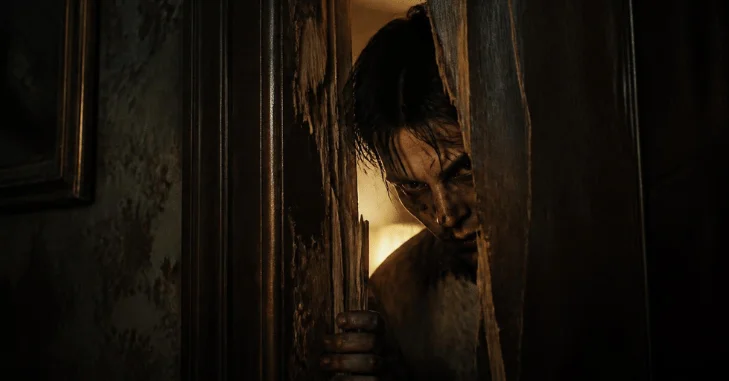
The Shining deliberately places that familiar idea inside a frightening situation. Jack behaves as though he is making a grand entrance. Wendy experiences that entrance as an immediate threat.
For viewers who knew the television reference, the contrast added another layer to the scene. Younger audiences can still understand Nicholson’s manic delivery without knowing Carson. Learning the original context makes the moment more revealing.
This explains why the quote can function in two cultural histories at once. It belongs to the history of American late-night television. It also belongs to the history of modern horror cinema.
From Horror Quote to Internet Meme
The scene became parody material long before today’s social platforms existed. Television programs, comedy sketches, music, and other movies repeatedly referenced Nicholson’s doorway appearance. Internet culture later gave those adaptations an even larger audience.
Modern memes usually use the image to represent an unexpected arrival. Someone or something appears suddenly, often where it isn’t wanted. Nicholson’s recognizable expression supplies the joke before readers even process the caption.
That flexibility has helped the reference survive changing generations. People can understand the basic meme without watching Carson’s show. They can even recognize the image without having watched all of The Shining.
The phrase therefore offers an interesting example of cultural recycling. Television created the reference, cinema changed its emotional meaning, and internet culture repackaged it again. Each stage introduced the same words to another audience.
The Phrase Has More Than One Pop-Culture Life
The Carson and Nicholson connections dominate search interest, but they aren’t the phrase’s only appearances. Music and comedy have reused the expression over several decades. A 1993 track by Dutch dance act Hocus Pocus was also titled “Here’s Johnny.”
Those later uses demonstrate how recognizable the wording became. Creators could invoke either Carson, Nicholson, or both depending on context. The phrase developed cultural meaning beyond its literal definition.
That history resembles the way other entertainment moments become shorthand for an entire era. A small piece of dialogue can outlive the program or movie surrounding it. Recognition keeps growing as new works reference the old ones.
NewPape readers interested in entertainment careers can browse the site’s James May profile for another look at television fame. His career shows how distinctive presentation styles can become part of a performer’s public identity.
Why “Here’s Johnny” Still Works Decades Later
The phrase survives because its two most famous contexts couldn’t be more different. Carson’s version represented an entertainer arriving before an enthusiastic television audience. Nicholson’s version announces a violent character forcing his way through a door.
The words are also exceptionally simple. People don’t need to memorize a speech or understand complicated dialogue. Two familiar words can recreate an entire scene.
Visual recognition strengthens that effect. Nicholson’s face appearing through the broken door became one of The Shining’s defining images. The dialogue and image now reinforce each other across memes, parodies, costumes, and references.
Its American television background adds historical depth to the joke. Understanding Carson explains why Jack says “Johnny” despite being named Jack. That small piece of context turns an apparently random line into a deliberate cultural reference.
Frequently Asked Questions
What does “Here’s Johnny” mean?
Here’s Johnny originally refers to the introduction associated with Johnny Carson on American television. Ed McMahon famously announced Carson using the phrase before the host appeared. Today, people also strongly associate those words with Jack Nicholson’s performance in The Shining.
Why does Jack say Johnny when his name is Jack?
Jack Torrance isn’t introducing himself as Johnny. Nicholson’s character is mimicking the familiar Johnny Carson television introduction. The reference would have been readily recognizable to many American viewers in 1980.
Who originally said the phrase?
Ed McMahon is the person most closely associated with delivering the famous introduction for Johnny Carson. McMahon said he devised the memorable wording himself. It became a signature part of Carson’s television identity.
Did Jack Nicholson improvise the line?
Yes, published accounts consistently describe Nicholson’s use of the line as improvised. It wasn’t simply Jack Torrance announcing his own name. Nicholson borrowed a famous television reference and transformed its tone through the scene.
Is the phrase from the original Stephen King novel?
The famous movie delivery isn’t a quotation originating from King’s novel. Its cultural joke depends on the Johnny Carson television reference. Nicholson’s performance helped make it synonymous with Kubrick’s film instead.
Why is the scene still so recognizable?
The scene combines a simple quote with powerful visual storytelling. Nicholson’s expression and the shattered door make the moment easy to identify. Decades of parodies and memes have introduced it to audiences who never saw the original release.
The Lasting Story Behind Two Famous Words
“Here’s Johnny” traveled an unusual path through American culture. It began as a cheerful introduction linked with Johnny Carson. Jack Nicholson then turned those familiar words into a chilling joke inside The Shining.
The movie didn’t erase the phrase’s television history. Instead, it gave the expression a second identity that became internationally recognizable. Memes and parodies have since carried both associations into new generations.
Understanding the original reference makes Nicholson’s scene even more effective. Jack Torrance isn’t saying something random while breaking through the door. He is twisting a familiar television welcome into something frightening, absurd, and unforgettable.