
Introduction
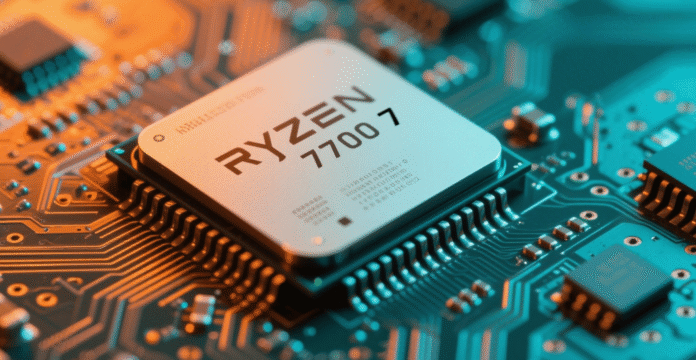
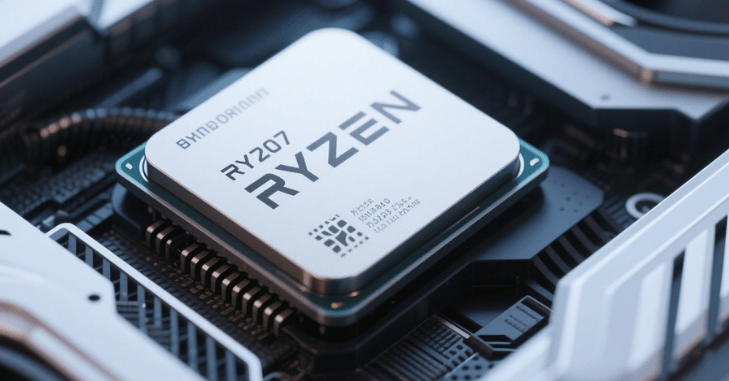
The AMD Ryzen 7 7700 is a compelling mid-to-high-end desktop processor that brings together next-generation performance, energy efficiency, and modern platform advancements, all at a competitive price point. Positioned within AMD’s Zen 4 “Raphael” series, it features 8 cores and 16 threads, leveraging the latest TSMC 5nm process for improved performance-per-watt and thermal characteristics.
Operating at a base clock of 3.8 GHz and reaching boost speeds up to 5.3 GHz, the chip delivers swift responsiveness for gaming, multitasking, video editing, software compilation, and more. It’s built on the new AM5 socket and supports cutting-edge technologies like DDR5 memory and PCIe 5.0, ensuring ample bandwidth and speed headroom for next-gen GPUs and NVMe storage.
Unlike many high-performance CPUs, it boasts a relatively low TDP of 65W, allowing for quiet and thermally efficient builds even in smaller form factor PCs. It also includes integrated Radeon graphics, eliminating the immediate need for a dedicated GPU and making it a practical choice for budget-conscious or phased-build users. Whether you’re a PC enthusiast, a creator, or a casual gamer, the Ryzen 7 7700 is designed to deliver modern computing power with future-proof flexibility.
| Feature | Specification |
| Architecture | Zen 4 (Raphael) |
| Process Node | TSMC 5 nm (CPU) + 6 nm (I/O) |
| Cores/Threads | 8 Cores / 16 Threads |
| Base Clock | 3.8 GHz |
| Max Boost Clock | Up to 5.3 GHz |
| L2 Cache | 8 MB |
| L3 Cache | 32 MB |
| TDP (Thermal Design Power) | 65W |
| Socket | AM5 |
| Integrated GPU | Radeon Graphics (2 cores at 2200 MHz) |
| Memory Support | Dual-channel DDR5 up to 5200+ MHz |
| PCIe Support | PCIe 5.0 |
AMD Ryzen 7 7700
The AMD Ryzen 7 7700 is a high-performance desktop processor that strikes an exceptional balance between power, efficiency, and modern platform features. Built on AMD’s cutting-edge 5nm Zen 4 architecture, the Ryzen 7 7700 packs 8 cores and 16 threads with a base clock of 3.8 GHz and boost speeds up to 5.3 GHz, making it ideal for gamers, content creators, and multitaskers alike.
What sets it apart is its impressive 65W TDP, offering substantial performance without demanding high-end cooling solutions. As part of the AM5 platform, it supports DDR5 memory and PCIe 5.0, enabling users to leverage the latest advancements in RAM speed and storage bandwidth. This ensures excellent future-proofing for evolving workloads and next-gen hardware.
The inclusion of AMD’s Wraith Prism RGB cooler enhances its out-of-the-box appeal, delivering both thermal efficiency and aesthetic flair. Whether you’re building a sleek gaming PC or a powerful productivity rig, the Ryzen 7 7700 offers top-tier performance, advanced technology support, and energy efficiency in one compelling package.
Zen 4 Architecture
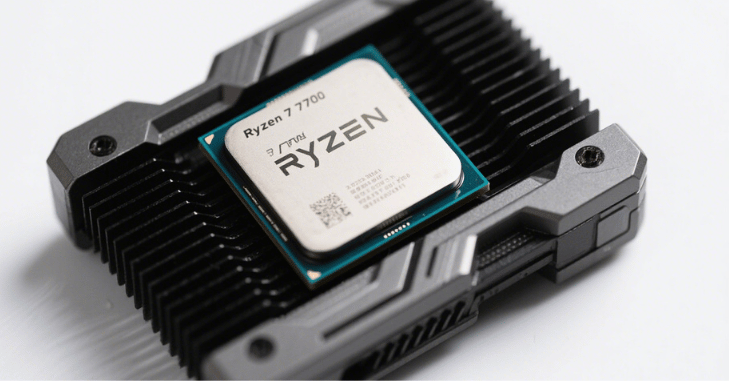
AMD’s Zen 4 architecture builds on the massive success of Zen 3 by introducing a smaller 5nm process, higher IPC (Instructions Per Cycle), and increased clock speeds. These enhancements translate into:
- Faster single-threaded performance, ideal for gaming and light workloads
- Improved multi-threading efficiency, beneficial for rendering, editing, and compiling
- Higher energy efficiency, thanks to process improvements and smart power management
Zen 4 also introduces AVX-512 instruction support, boosting performance in AI workloads and scientific applications.
Ryzen 7 7700 vs. Ryzen 7 7700X
Although both CPUs share the same core and thread counts, there are critical differences:
| Feature | Ryzen 7 7700 | Ryzen 7 7700X |
| Base Clock | 3.8 GHz | 4.5 GHz |
| Boost Clock | 5.3 GHz | 5.4 GHz |
| TDP | 65W | 105W |
| Cooler Included | Yes (Wraith Prism RGB) | No |
| Power Efficiency | Better | Lower |
Integrated Graphics: Radeon Onboard
The inclusion of basic Radeon Graphics on the Ryzen 7 7700 is a welcome addition. While not powerful enough for serious gaming, these integrated graphics are useful for:
- System troubleshooting
- Basic display tasks (4K video playback, streaming)
- Entry-level use cases (office work, education)
This means users can set up a functioning system without a discrete GPU, which is a major advantage for budget-conscious builds or when waiting for GPU prices to stabilize.
Thermal and Power Efficiency
One of the standout features of the Ryzen 7 7700 is its impressively low 65W TDP, which, when paired with AMD’s efficient 5nm manufacturing process, results in excellent thermal and power efficiency. This means the processor runs cooler even under sustained workloads, making it ideal for users who prioritize quiet operation and minimal heat generation.
As a result, it doesn’t require high-end or costly cooling solutions, reducing the overall build cost while still delivering strong performance. This efficiency also makes the Ryzen 7 7700 a great option for compact builds or systems focused on energy conservation. This well-balanced thermal solution enhances the chip’s appeal, offering both style and reliability without the need for aftermarket cooling.
Performance Benchmarks
Gaming Benchmarks (Paired with RTX 4070, 1080p Ultra)
| Game | Average FPS |
| Elden Ring | 115 FPS |
| Cyberpunk 2077 | 100 FPS |
| Shadow of the Tomb Raider | 135 FPS |
| Horizon Zero Dawn | 120 FPS |
| Call of Duty: Warzone | 140 FPS |
Productivity Benchmarks
| Task | Score / Time |
| Cinebench R23 Multi-Core | ~17,800 pts |
| Cinebench R23 Single-Core | ~1,900 pts |
| Blender BMW Render | ~1 min 28 sec |
| Geekbench 6 Multi-Core | ~11,900 pts |
| HandBrake 4K to 1080p Encode | ~3.5 minutes |
DDR5 and PCIe 5.0: Future-Proof Technologies
The Ryzen 7 7700 is built on the AM5 platform, which brings support for both DDR5 memory and PCIe 5.0 devices, making it a highly future-proof choice for modern PC builders. With DDR5, users gain access to faster memory kits that offer significantly improved bandwidth, enhancing overall system responsiveness and multitasking capabilities.
Additionally, PCIe Gen5 support allows for the use of cutting-edge SSDs with blazing transfer speeds exceeding 12,000 MB/s, as well as seamless compatibility with next-generation GPUs and other high-performance expansion cards.
However, it’s important to note that AM5 motherboards and DDR5 memory are generally more expensive than their AM4 and DDR4 predecessors. While the upfront cost may be higher, the platform’s advanced features and scalability ensure better long-term value for users looking to build a system that remains relevant for years to come.
Ideal Use Cases
| Use Case | Suitability |
| Gaming | Excellent (paired with mid- to high-end GPU) |
| Streaming | Smooth performance with enough threads |
| Video Editing | Great for 4K editing/rendering |
| Software Development | Fast compilation and multitasking |
| Everyday Use | Overkill, but ensures future performance |
| HTPC (Home Theater PC) | Efficient and quiet operation |
Pros and Cons
Pros
- Excellent performance-per-watt
- Cooler included in the box
- DDR5 and PCIe 5.0 support
- Integrated graphics for troubleshooting
- Strong single- and multi-core performance
- Great for gaming, content creation, and office work
Cons
- Requires DDR5 memory (higher cost)
- AM5 motherboards are still relatively expensive
- Integrated GPU is not gaming-capable
Pricing and Availability
As of mid-2025, the AMD Ryzen 7 7700 is available for around $300 USD, though prices may vary depending on region, sales, or bundled deals. It sits competitively against Intel’s Core i5-13600K, offering similar performance at lower power usage and with the benefit of a stock cooler.
Suggested Build with Ryzen 7 7700
- CPU: AMD Ryzen 7 7700
- Cooler: Wraith Prism (included) or upgrade to Noctua NH-D15
- Motherboard: MSI B650 Tomahawk WiFi
- RAM: 32GB DDR5-6000 (2x16GB)
- Storage: 1TB Gen4 NVMe SSD
- GPU: NVIDIA RTX 4070 or AMD RX 7800 XT
- PSU: 750W Gold Rated
- Case: Fractal Design Meshify 2
Conclusion
In summary, the AMD Ryzen 7 7700 successfully blends high-end features with practical efficiency, making it one of the most balanced CPUs available in the current generation. It provides strong performance across gaming, content creation, and productivity workloads while maintaining a low power footprint and manageable thermals.
Read More: – Comprehensive Review of the Eero Pro 6E: Advanced Wi-Fi 6E Router for Ultimate Home Connectivity
With support for DDR5 and PCIe 5.0, the Ryzen 7 7700 ensures longevity and adaptability as newer hardware becomes mainstream. While the AM5 platform and DDR5 memory require a higher initial investment, the long-term benefits in performance and future compatibility justify the cost.
Want to know about “Unlock the Power of Your Google Streaming Device: A Deep Dive into Chromecast and Android TV Features” Check out our “Tech” category.
FAQs
The AMD Ryzen 7000 Series includes the AMD Ryzen 7 7700 CPU. This variant is a very efficient CPU to install in your gaming PC because it has a considerably lower TDP, with a maximum of 65W.
Launched in January 2023, the AMD Ryzen 7 7700 is an 8-core desktop processor with an MSRP of $329.
Because Ryzen 7 has more cores and threads, it frequently provides greater performance for multitasking and content creation.
With two graphics cores and a graphics frequency of 2200 MHz, the AMD Ryzen 7 7700 Processor has strong graphics capabilities.
AMD Ryzen 7 CPUs are more cost-effective and have superior multitasking capabilities than Intel i7 CPUs, which are often more expensive and have better single-core performance.