
Introduction
When it comes to home design and security, door knobs are often an overlooked detail. However, they play a crucial role in both the aesthetic and functionality of a space. From offering access and safety to enhancing the style of a room, the right door knob can transform how your space looks and feels. understanding the different types of door knobs can help you make an informed decision that combines function with design appeal.
Here’s an expanded and detailed guide to the many types of door knobs available on the market today. Beyond functionality, door knobs also vary in design ranging from traditional round knobs to modern lever handles and come in a variety of materials like brass, stainless steel, and even glass.
| Type of Door Knob | Description | Common Usage | Locking Mechanism | Pros | Cons |
|---|---|---|---|---|---|
| Passage Knob | Non-locking knob, used for easy access | Hallways, closets | No lock | Easy to install, convenient | No privacy or security |
| Privacy Knob | Lockable knob, typically with push-button or twist lock | Bedrooms, bathrooms | Interior lock (no key) | Provides privacy, easy to unlock from outside in emergencies | Not very secure for exterior use |
| Keyed Entry Knob | Lockable knob with a key for outside access | Front/back doors | Key lock outside, twist/push inside | Secure, good for exterior use | Keys can be lost; more complex to install |
| Dummy Knob | Fixed knob for aesthetic or pulling purposes | Closets, decorative doors | None | Easy to install, great for decorative use | Non-functional, no turning or locking |
| Electronic Knob | Keypad or smart-enabled knob with electronic lock | Smart homes, offices | Digital (code, app, fingerprint) | High security, keyless entry, remote access | Requires batteries or power, more expensive |
| Mortise Knob | Built into a pocket inside the door, often paired with a deadbolt | Commercial, older homes | Mortise lock (key and latch) | Strong, durable, high security | Difficult to install, more expensive |
| Glass/Crystal Knob | Decorative knob often made of glass or crystal | Interior decorative doors | Usually privacy or passage style | Aesthetic appeal, vintage charm | Fragile, not ideal for high-use areas |
| Lever Handle Knob | Lever-style knob, easier to operate than round knobs | Accessible rooms, ADA use | Same as keyed/privacy/passage | Easy for elderly/disabled, stylish | Can snag on clothes or bags |
| Ball Knob | Spherical knob, classic design | General use | Depends on model | Traditional look, easy to grip | Not ergonomic for everyone |
| Tulip Knob | Flower-like shape, narrow at the base, wider at the top | Interior/exterior doors | Depends on model | Decorative, commonly found | May be hard to grip for some |
Types of Door Knobs
Door knobs come in various types, each designed to serve a specific function and suit different areas of a home or building. The most common types include passage door knobs, which are used for interior doors that don’t require locking, such as hallway or closet doors.
Privacy door knobs are ideal for bedrooms and bathrooms since they include a locking mechanism on one side, offering personal privacy without the need for a key. For exterior doors, keyed entry knobs provide enhanced security by incorporating a key-operated lock, often used alongside deadbolts for added protection.
Another popular type is the dummy door knob, which is non-functional and typically used for decorative purposes on doors that don’t need latching, like certain closets or double doors. Choosing the right door knob depends on the door’s purpose, the level of security needed, and the desired aesthetic.
Passage Door Knobs

Passage door knobs are non-locking knobs used for interior doors that do not require privacy or security. They are perfect for closets, hallways, and other rooms where easy access is needed. These knobs turn freely on both sides of the door and don’t have a locking mechanism. Since they do not offer any locking functionality, passage knobs are ideal for spaces where convenience is the priority. They are also frequently used in children’s rooms or between rooms that are frequently accessed.
Privacy Door Knobs
Privacy door knobs are specifically designed for areas where some level of privacy is required, such as bedrooms and bathrooms. These knobs come with a built-in locking mechanism that can be activated from the inside. Most models feature an emergency unlock option on the outside, often via a small hole that can be unlocked with a generic tool or pin. This feature makes them safe and practical, particularly in homes with children. Privacy knobs are a balanced option that offer both security and peace of mind without the need for a key.
Keyed Entry Door Knobs
Keyed entry door knobs are typically used for exterior doors and provide a higher level of security. These knobs feature a key-operated lock on the outside and a manual turn or push-button lock on the inside. They are ideal for front doors, back entrances, garage doors, and other areas that require controlled access.
Many models are compatible with deadbolts or can be integrated into home security systems for enhanced protection. Some newer designs even offer bump-proof or pick-resistant features, making them a solid choice for security-conscious homeowners.
Dummy Door Knobs
Dummy knobs are non-functional and purely decorative. They do not turn, latch, or lock, and are mounted directly to the surface of a door or cabinet. These knobs are commonly used on double doors, pantries, or closets where a latch is not needed but a symmetrical or decorative appearance is desired. They’re also ideal for wardrobe doors or as handle pulls in spaces where functionality isn’t a concern but style and uniformity are.
Electronic or Smart Door Knobs
With the advancement of home technology, electronic and smart door knobs have become increasingly popular. These modern knobs offer keyless entry through numerical keypads, Bluetooth connectivity, Wi-Fi, or even fingerprint biometric scanners. Many of these smart knobs integrate with home automation systems, allowing you to lock and unlock doors remotely using a smartphone app or voice commands.
Mortise Door Knobs

Mortise door knobs are part of a more complex locking system known as a mortise lock. This type of lock requires a pocket—or mortise—to be cut into the edge of the door. Mortise knobs are typically more robust and durable than cylindrical locks and are frequently found in older buildings, commercial spaces, and upscale residential properties. These knobs often come as part of a comprehensive lock set that includes the knob, lock body, strike plate, and trim. Their sturdy construction makes them a top choice for high-traffic areas.
Lever Handle Door Knobs
While technically lever handles aren’t knobs, they are often grouped under the same category because they serve a similar purpose. Lever handles are easier to operate than traditional round knobs, making them a great option for people with arthritis, limited hand strength, or disabilities.
Lever handles also meet ADA (Americans with Disabilities Act) requirements and are commonly found in commercial buildings, healthcare facilities, and accessible homes. They come in various styles, from sleek modern to ornate traditional, and can be used in both residential and commercial applications.
Crystal and Glass Door Knobs
Crystal and glass door knobs exude vintage charm and elegance. These knobs were especially popular in the early 20th century and are still widely appreciated for their aesthetic appeal. Often found in older homes, vintage remodels, or used as decorative accents, these knobs are available in a range of colors, shapes, and decorative patterns.
Ceramic and Porcelain Door Knobs
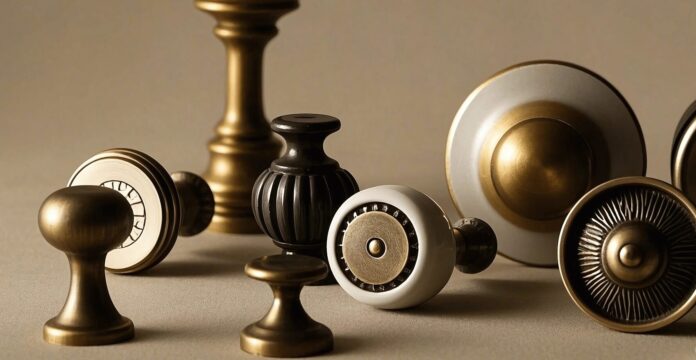
Ceramic and porcelain knobs are known for their distinctive look and hand-painted details. These knobs are often associated with antique or rustic decor and are commonly used in vintage-style homes, cottages, and specialty spaces. Some ceramic knobs feature floral patterns, artistic designs, or solid pastel colors that can tie in with the overall decor theme of a room.
Brass and Bronze Door Knobs
Brass and bronze knobs are among the most popular choices due to their strength, classic appeal, and longevity. Brass knobs often have antimicrobial properties, making them a hygienic choice for homes, especially in bathrooms and kitchens. Bronze knobs, on the other hand, are known for their rustic appearance and resistance to corrosion, making them ideal for exterior use. Both finishes age beautifully, developing a unique patina over time that adds character and depth to your home’s decor.
Choosing the Right Door Knob

Selecting the right door knob involves more than just picking a style that looks good. Consider the function of the room, the level of security needed, the ease of operation, and how the knob will integrate into your overall design aesthetic. Will the knob need to lock? Will it be used frequently? Is it accessible to all members of the household?
Read More: – Gas vs Electric Lawn Mower
Material and finish are also important—whether you prefer polished chrome, oil-rubbed bronze, antique brass, or matte black, the finish should complement other hardware and decor elements in your home. In homes with children or seniors, ease of use and safety features may take precedence. For homeowners interested in technology, smart knobs offer advanced features and customization.
Conclusion
Door knobs may seem like a small detail, but they play a significant role in the look and function of your home. With the wide range of types, styles, and finishes available today, you’re sure to find options that blend security, usability, and design. By understanding the various types available, you can choose the perfect combination of form and function that meets your specific needs and personal style.
Apart from that, if you are interested to know about “Outdoor Bed Swings: The Ultimate Guide to Comfort and Style, Maintenance Tips” then visit our “Home Improvement” category.
FAQs
Yes! Smart door knobs integrate with home automation systems, allowing keyless entry via smartphones, keypads, or biometrics like fingerprints.
Yes! Most door knobs can be DIY replaced with basic tools like a screwdriver. It’s a relatively simple home upgrade that doesn’t require professional help.
Lever handles are easier to operate, especially for elderly people or those with disabilities. They also offer a modern look. Round knobs are more traditional and can be harder for small children to open, adding an element of childproofing.
A keyed knob combines turning and locking in one unit. A deadbolt offers stronger security by extending a solid metal bolt into the door frame, often used in combination with a keyed knob for exterior doors.
Dummy knobs are decorative or non-functional and don’t turn or latch. They are used on doors that don’t require a latch, such as closets, pantry doors, or double doors where one side is fixed.