
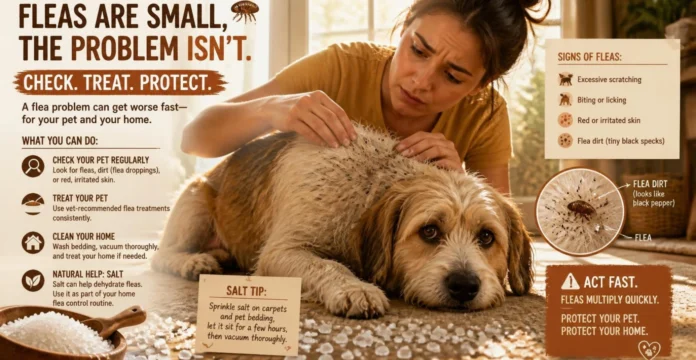
If you are asking does salt kill fleas, the practical answer is no, not reliably. Salt may dry some exposed insects, but it cannot control every life stage in a home. U.S. health and veterinary sources recommend coordinated cleaning, pet treatment, and follow-up instead.
Salt is not a dependable treatment for a household infestation. It may dehydrate a few exposed pests, yet eggs, larvae, and protected pupae can remain hidden. For lasting control, treat every pet, vacuum frequently, wash bedding, and use labeled products or professional help when needed.
| Question | Practical answer |
| Can salt clear an infestation? | No, not reliably. |
| Can it affect exposed insects? | Possibly, through drying after direct contact. |
| Does it reach protected cocoons? | No dependable evidence shows that it does. |
| Is direct use on pets advised? | No. Use species-appropriate products and veterinary guidance. |
| Best first steps | Treat pets, vacuum, wash bedding, and follow up. |
Key takeaways: Salt is not a proven whole-home treatment. Hidden life stages make surface remedies incomplete. Pet treatment and home cleaning should happen together. Follow-up is necessary because protected stages can emerge later.
How Does Salt Kill Fleas, and Why Is It Unreliable?
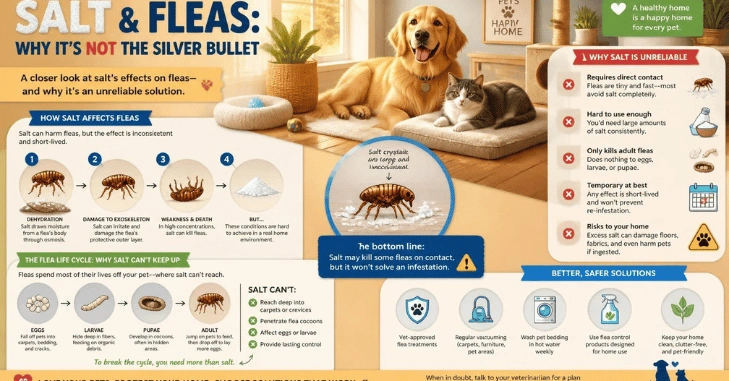
Does salt kill fleas? The idea behind salt is desiccation, meaning moisture loss from direct contact. In theory, a dry crystal layer may stress exposed insects long enough to harm them. The problem is that household infestations do not stay exposed on a carpet surface.
Evidence for indoor salt treatment is weak and inconsistent. FleaScience found no convincing literature supporting salt as an indoor control method. Current veterinary sources also describe the remedy as ineffective or unsafe when heavily applied around pets.
Humidity, carpet depth, furniture seams, and floor cracks all reduce contact. Any insects that escape contact remain available to continue the cycle. That makes a kitchen ingredient a poor substitute for a complete control plan.
Why the Life Cycle Makes Salt a Weak Choice
The CDC describes four stages: egg, larva, pupa, and adult. Eggs drop into the environment, while larvae move through protected household areas. Pupae develop inside cocoons that can shield them from environmental stress and some treatments.
That cocoon stage matters because treatment may seem successful before new adults emerge. Cornell notes that younger stages remain in the environment while adults live on animals. A surface remedy therefore misses important places where the population develops.
This also explains why salt may appear to work briefly; earlier treatments or simultaneous cleaning may remove some immature stages. New adults can still appear later if the hidden cycle was not interrupted.
Does Salt Kill Flea Eggs or Larvae?
There is no strong evidence that household salt reliably clears eggs or larvae indoors. Some sources suggest possible drying effects when immature stages contact enough salt. The available evidence remains too weak for dependable home treatment.
The practical problem is contact, not only chemistry. Eggs fall into rugs, bedding, upholstery, and floor gaps throughout the home. Larvae also move through environmental areas where surface crystals may never reach them.
Pupae are harder because the developing insect sits inside a protective cocoon. Cornell states that this stage can resist insecticides, freezing, and drying. A salt-only approach cannot reliably break that part of the cycle.
Is Salt Safe Around Dogs and Cats?
Do not put loose salt directly on a dog or cat for parasite control. Heavy environmental use can create exposure through licking, grooming, paws, or dust. PetMD specifically warns that amounts intended to affect immature parasites can harm pets.
Safer choices depend on species, age, weight, and health status. EPA advises using products only for the animal listed on the label. It also warns never to apply dog-only products to cats.
If a pet reacts after a labeled treatment, follow the product instructions immediately. EPA advises contacting a veterinarian or the National Pesticide Information Center before applying. Keep the package so professionals can identify the active ingredient and directions.
For more everyday pet-care context, browse NewPape’s Pets section. Cat owners may also find the orange tabby guide and Balinese cat guide useful. Dog owners can review the Shih Tzu planning guide when budgeting for preventive care.
What Works for a Home Infestation?
CDC recommends tackling the animal and the home at the same time. Start with sanitation, then treat every pet with appropriate veterinary guidance. Follow-up matters because protected stages can survive the first round.
- Vacuum carpets, rugs, upholstered furniture, baseboards, and floor cracks.
- Wash pet bedding and washable household fabrics in hot, soapy water.
- Treat every pet using a veterinarian-recommended or correctly labeled product.
- Use indoor control products only as directed, especially around children and animals.
- Repeat sanitation and scheduled follow-up until new activity stops.
EPA guidance on controlling fleas around the home calls daily vacuuming the best initial control method for a home infestation. It also recommends steam cleaning and washing pets in hot, soapy water. Focus especially on places where animals sleep or rest.
UC IPM also recommends frequent vacuuming during heavy infestations. It suggests targeting carpets, upholstery, cracks, and areas under furniture. Labeled insect growth regulator products can help interrupt development when used correctly.
How Long Does Effective Control Take?
Expect control to take longer than one cleaning session. CDC guidance on fleas says moderate or severe infestations can require months to eliminate, and it recommends follow-up treatments within five to ten days, plus continued sanitation.
Cornell also notes that environmental management may take several months. New adults can emerge after earlier cleaning because pupae remain protected. Persistence matters more than increasing the amount of a home remedy.
Track progress by checking pets, bedding, and favorite resting areas. A flea comb can help you see whether adult activity is declining. If activity remains high, reassess the pet treatment and home plan with professionals.
When to Call a Veterinarian or Pest Professional
Contact a veterinarian when a pet has heavy itching, skin damage, weakness, or other concerning symptoms. You should also ask about prevention when several animals share the home. Treatment needs can differ by species and individual health.
A pest professional can help when repeated cleaning and proper pet treatment do not reduce activity. Severe infestations may require targeted indoor products and several follow-up visits. CDC notes that licensed professionals can help choose appropriate home and yard treatments.
Avoid mixing products or applying more than the label permits. More chemical does not mean faster or safer control. EPA emphasizes following label directions to reduce unnecessary exposure for pets and people.
The Bottom Line
Salt is cheap, available, and easy to sprinkle, but those qualities do not make it dependable. U.S. guidance favors coordinated pet care, cleaning, and correctly labeled products. That approach targets the full life cycle, not just exposed insects.
If you see ongoing activity, start with your veterinarian and a careful home-cleaning schedule. Bring in a licensed pest professional when the infestation persists or covers several rooms. This measured approach is safer than repeatedly applying an unproven home remedy.
Frequently Asked Questions
Does Salt Kill Fleas in Carpet?
Sprinkling salt over carpet is not a reliable way to clear an infestation. Crystals may contact some exposed insects, but hidden stages remain beyond reach. Frequent vacuuming and labeled control methods have much stronger support.
How Long Should Salt Stay on Carpet?
There is no evidence-based household exposure time that makes this remedy dependable. Online advice gives different windows because no standardized indoor treatment exists. Use proven sanitation methods instead of leaving salt exposed.
Does Salt Water Work for Pets?
Salt water is not a recommended standard treatment for dogs or cats. It can irritate skin and does not address the environmental stages. Ask your veterinarian for a product suited to your pet’s species and weight.
What Is the Fastest Way to Reduce an Infestation?
Begin pet treatment and home sanitation on the same day. Vacuum thoroughly, wash bedding, and keep follow-up on schedule. Severe cases may need professional treatment because no single household remedy reaches every stage.
Can an Infestation Come Back After Treatment?
Yes, new adults can emerge from protected pupae after early cleaning or treatment. That does not always mean the plan failed. Continued vacuuming and scheduled follow-up help catch the next wave.